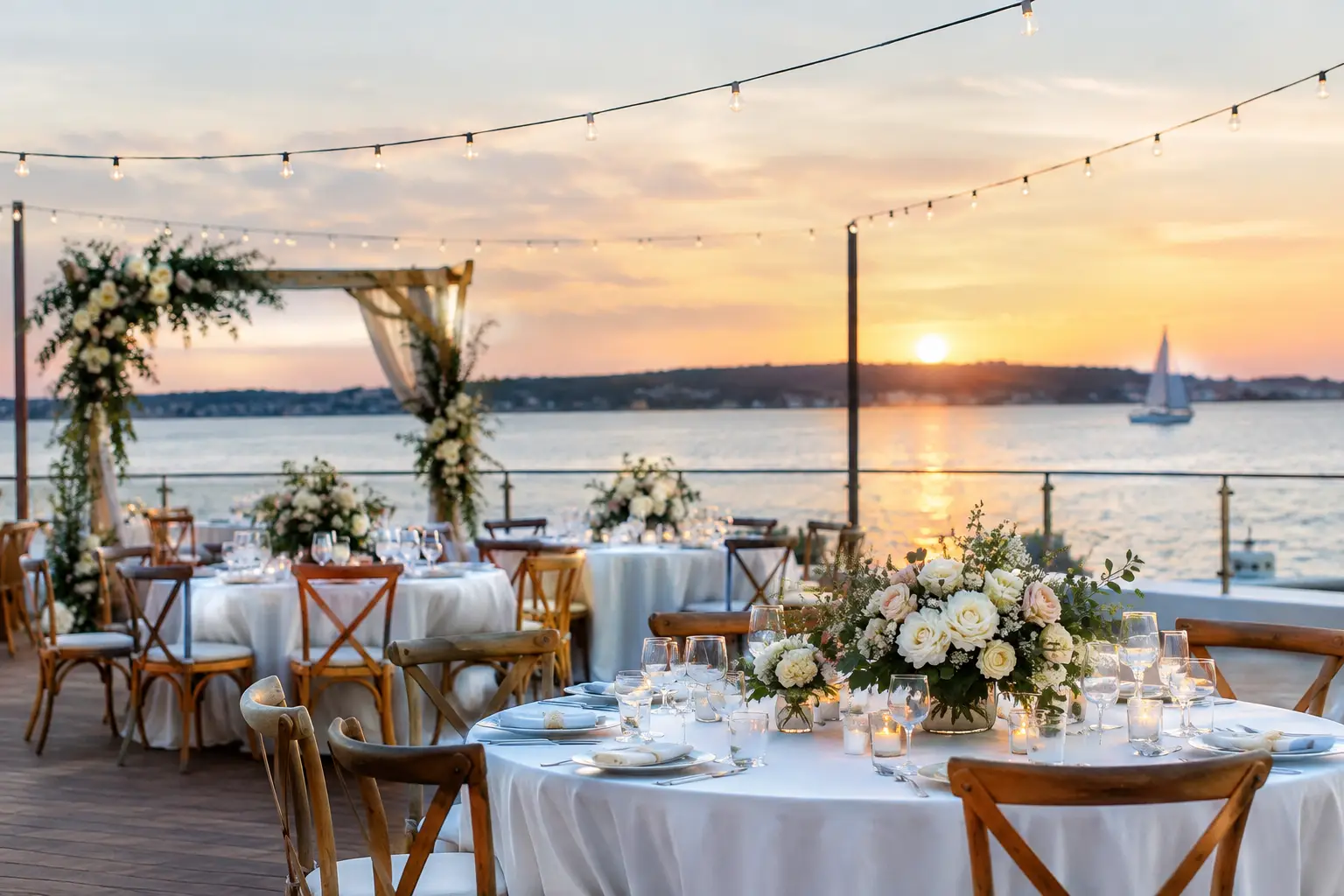
A waterfront reception gives your wedding day a ready-made sense of occasion. The changing light, the view across the water and the opportunity for relaxed photographs can make even a simple celebration feel special. To organise a waterfront wedding reception well, though, the practical details need as much attention as the backdrop. Your guests should be comfortable, your timings realistic and your venue ready for the British weather.
For couples celebrating in Shoreham-by-Sea and the wider Sussex area, the best approach is to choose a venue that makes the day easier to manage rather than creating a long list of suppliers, deliveries and last-minute decisions.
Start with the shape of your celebration
Before comparing menus or choosing table decorations, decide what you want your reception to feel like. A wedding breakfast followed by an evening party has different requirements from a relaxed afternoon gathering with drinks, buffet food and background music. Neither is better – it depends on your guest list, budget and how formal you would like the day to be.
Think about numbers early. A room that feels welcoming for 35 guests may feel rather empty for 15, while a space that works beautifully for a seated meal may need a different layout for 100 people who want to dance. Make a working guest list with adults, children and evening-only guests separated. This gives you a clearer basis for discussing room layouts, catering quantities and bar arrangements.
It also helps to decide whether your reception follows a ceremony elsewhere or whether guests will arrive directly at the venue. If people are travelling from a registry office, church or outdoor ceremony, allow more time than you first expect. Group photographs, traffic, confetti, greetings and the occasional missing buttonhole can all affect the schedule.
Choose a waterfront venue for more than the view
The water may be what draws you in, but the facilities are what allow everyone to enjoy it. When viewing reception venues, look beyond the photograph opportunities and ask how the room works for a real event.
A private function room gives your group its own space to celebrate, rather than sharing a busy restaurant or public bar with other customers. For a wedding reception, this matters. You can welcome guests properly, play your own music, display photographs or place cards, make speeches without competing with another table and set the room around your plans.
At a waterfront setting, access is especially worth checking. Guests may include grandparents, young children, friends in heels and people arriving with prams or mobility equipment. Disabled access, nearby parking and a straightforward entrance remove stress before the celebration has even begun. Free on-site parking can also be a significant help for guests travelling from Brighton, Worthing or further across Sussex.
At The Harbour Club, the private function room overlooks Silversands Beach and the River Adur, while accommodating celebrations from 10 to 120 guests. That combination lets couples choose a coastal setting without needing to take on the logistics of a large hotel wedding.
Visit at the time your reception will take place
A morning viewing is useful, but it will not tell you everything about an evening celebration. If possible, see the room at a similar time of day to your event. Notice where the light falls, how guests will move from arrival drinks to dining or dancing, and whether the waterfront view is best enjoyed from inside, outside or both.
Ask where photographs can be taken if the weather turns. The best waterfront wedding receptions have a plan for sunshine, wind and rain without making any of them feel like a disappointment.
Build a realistic reception timetable
Waterfront venues encourage a relaxed pace, which is lovely, but guests still need to know what happens next. A simple running order keeps the day flowing and helps your caterers, bar team, photographer and entertainment work together.
For a reception after a ceremony, allow time for arrivals, welcome drinks and photographs before food is served. Speeches can take place before the meal, between courses or afterwards. There is no fixed rule. If your speakers are nervous, getting speeches done early can let everyone relax. If you would rather keep the atmosphere informal, speeches after the meal may suit better.
Leave breathing room between each part of the day. Guests enjoy time to talk, look at the water and take photographs of their own. Trying to fill every minute often creates unnecessary pressure. A well-planned reception has structure, but it does not feel over-managed.
If you are hosting an evening party, consider how the room changes after the meal. Clearing tables, opening the dance floor and adjusting lighting can mark the shift from wedding breakfast to celebration. Check what is included with the room hire and what can be arranged as an optional extra, such as entertainment, event styling or production equipment.
Plan food and drink around your guests
Food is one of the most memorable parts of a wedding reception, but it does not have to mean a formal three-course meal. A sit-down menu can suit a traditional celebration, while a buffet, sharing dishes or lighter catering may work better for a daytime event or a mixed-age guest list.
The key is to give the venue accurate information early. Ask guests about allergies, dietary requirements and children’s meals when they RSVP, rather than chasing answers in the final week. Vegetarian, vegan and gluten-free choices should feel like part of the menu, not an afterthought.
A licensed private bar is useful because guests can buy or enjoy drinks without you arranging separate stock, glassware, refrigeration and licensing. When discussing packages, be clear about whether you would like arrival drinks, wine with food, a toast, a paid bar or a minimum bar spend arrangement. A minimum spend can be good value when it suits the size and habits of your group, but it is worth understanding exactly what is included and how it is calculated.
Self-catering can offer flexibility for some families, particularly where favourite dishes or cultural food traditions are important. It does, however, bring more responsibility. Confirm kitchen access, serving arrangements, food safety requirements, timings and who will clear away. For many couples, venue catering keeps the day simpler and gives family members more time to celebrate.
Make comfort part of the styling plan
Waterfront styling need not be themed around anchors, shells and navy stripes unless that is genuinely your taste. The view already provides character. Simple flowers, candles where permitted, linen colours that complement the room and personal touches on the tables can be enough.
Consider the practical side of comfort at the same time. A bright room may need thoughtful table placement, especially during late-afternoon sun. An outdoor photograph spot may be breezy, so a note in advance can help guests choose a jacket or wrap. If children are attending, a small activity table or quiet corner can make a surprisingly big difference for parents.
For wedding stationery and signs, keep directions clear. Let guests know where to park, what time to arrive and whether the celebration includes a meal. If there is a dress code, say so kindly and plainly. Good information prevents the repeated questions that can distract you on the day.
Have a wet-weather plan you will be happy to use
In Sussex, a wet-weather plan is not pessimistic. It is sensible hosting. The ideal arrangement is one where rain simply changes the location of photographs or drinks, not the quality of the occasion.
Confirm whether umbrellas, covered entrance areas and indoor photograph backdrops are available or need to be supplied. If you have planned outdoor games, a drinks reception by the water or a confetti moment outside, decide on an indoor alternative before the day. Your photographer can usually suggest options once they know the venue layout.
Wind deserves attention too. It can affect candles, table decorations, signage, hair and outdoor music. Secure lightweight décor and avoid relying on a single outdoor moment that could become uncomfortable for guests. The waterfront should add atmosphere, not create a reason for everyone to rush inside.
Keep the booking process straightforward
Once you have found a room that fits your guest count and plans, secure the date promptly. Popular weekends, summer dates and Christmas-period celebrations can be booked well ahead. A clear deposit process helps you commit while giving you time to finalise menus, layouts and entertainment nearer the date.
Ask for the practical details in writing: hire period, access time for suppliers or decorators, capacity, included facilities, bar arrangements, catering deadlines, music finish time and final payment date. You do not need to turn your wedding reception into a spreadsheet exercise, but a simple checklist keeps the essentials visible.
A good venue team should be happy to talk through the options, whether you need a half-day reception, a full-day celebration or an evening party. Arrange a viewing, bring your likely guest numbers and explain what matters most to you. With the room, food, drinks and weather plan in place, you can spend the day looking out at the water and enjoying the people who came to celebrate with you.